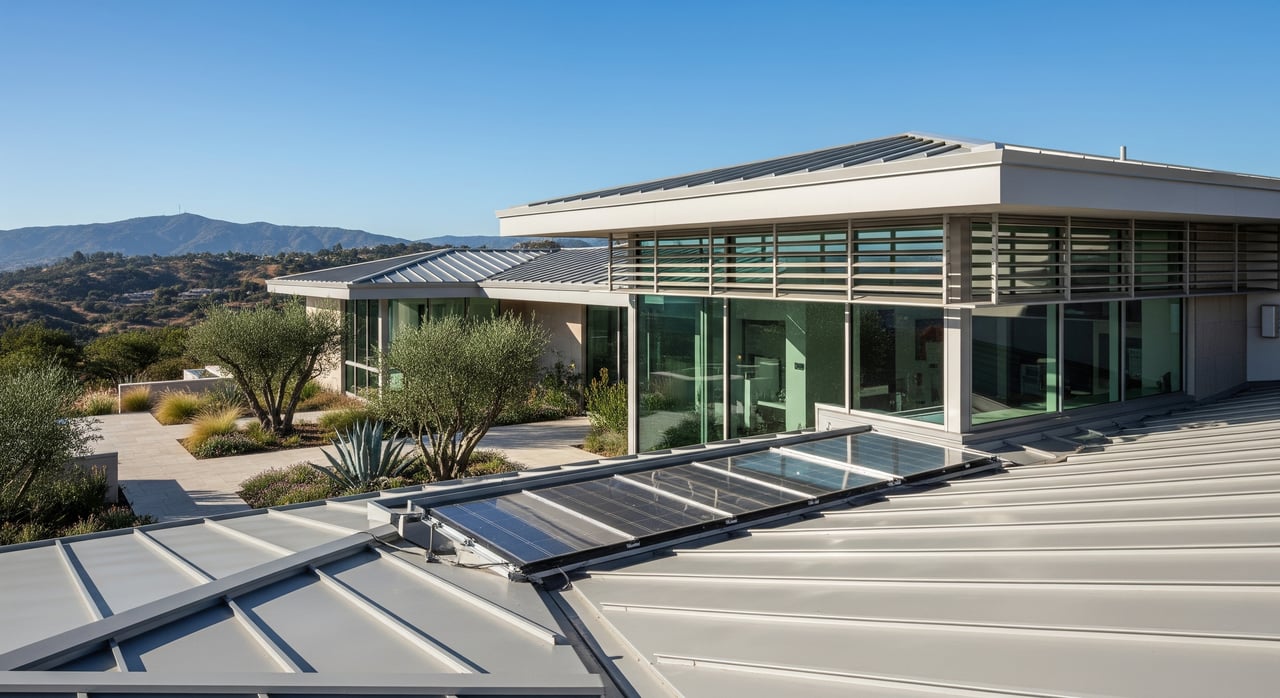
Porter Ranch Cool Roofs & Windows Guide to Lower Heat
October 23, 2025
October 23, 2025
If summer afternoons in Porter Ranch leave your upstairs rooms baking and your AC running nonstop, you are not alone. The Valley’s inland heat and west-facing sun can push homes past their comfort zone and your utility budget. The right roof and window choices help you stay cooler, reduce peak demand, and protect your home. In this guide, you will learn which ratings matter, the best options for our climate, and how Los Angeles rebates can lower costs. Let’s dive in.
Porter Ranch sits in the San Fernando Valley’s hot inland zone, where summer sun drives cooling loads. California’s climate maps place ZIP 91326 in Title 24 Climate Zone 9, which has hotter summers than coastal areas. That makes reducing solar heat gain through your roof and windows a smart move for comfort and bills. You will feel the biggest impact on top floors and on west and south exposures.
According to research on cool surfaces, roofs that reflect sunlight and release heat help lower roof and attic temperatures. The result is less strain on your AC and often a more even indoor temperature during the hottest hours. In our microclimate, these upgrades can also help reduce neighborhood peak demand during late afternoons.
For a plain-language overview of cool roofs and why SRI matters, see the LBNL Heat Island Group’s cool roof summary.
California’s Title 24 energy code requires cool-roof performance for many new and reroof projects and uses CRRC product ratings for compliance. The City of Los Angeles Green Building Code layers on prescriptive thresholds that reference aged SRI values by roof slope and building type. For a code summary and SRI context, the state’s guide at CoolCalifornia is a helpful starting point. Porter Ranch (ZIP 91326) is listed in Climate Zone 9 in Title 24’s appendix, which you can confirm in the CEC climate zone reference.
As a City of Los Angeles resident served by LADWP, you may qualify for rebates that cut first costs. The LADWP Consumer Rebate Program currently offers:
Common cool choices include single-ply white membranes such as TPO or PVC, or bright coatings over an existing membrane. These systems achieve high reflectance and emittance and can significantly lower top-floor heat. For science-backed context on how cool roofs perform, review the LBNL cool roofs overview.
Maintenance matters. Dirt and weather reduce reflectivity over time, which is why codes and rebates look at 3-year aged ratings. Cleaning and periodic recoating help protect performance. If you are comparing costs, EPA summaries note that roof coatings are often a lower-cost pathway to a cool roof; see the federal overview of costs and benefits in the EPA’s guide to cool roofs and heat islands at the archived page Using Cool Roofs to Reduce Heat Islands.
Historically, darker steep-slope roofs were less reflective. Today, cool-colored shingles and tiles use pigments that reflect more near-infrared light, which improves performance without a bright white look. Light-colored tile, metal roofs with reflective coatings, and cool-colored asphalt shingles are all options. For the technology behind cool-colored materials and field results, explore LBNL’s work on cool color roofing materials.
Cool roofs are generally compatible with rooftop solar. Lower roof temperatures can slightly improve PV output, but always confirm attachment details and warranty requirements with your roofer and solar installer.
Start where the heat is worst. West and south windows see the most afternoon sun in Porter Ranch, so prioritize SHGC reduction there. Pair a low SHGC with a low U-factor to limit both heat gain and heat loss. As a rule of thumb for LADWP rebates, look for windows at U-factor 0.30 or lower and SHGC 0.25 or lower.
Good-better-best options vary by budget. Double-pane low-e windows with argon fill hit a strong cost-performance balance for most homes. Triple-pane units can reduce noise and boost winter insulation, although cooling savings in our climate are usually smaller compared with the jump from single-pane to double-pane. For installation, proper flashing and airtightness are as important as the glass specs. See the ENERGY STAR window guide for more details.
Measured results vary by house, roof area, attic insulation, and HVAC. EPA-cited studies report cooling peak reductions of roughly 11 to 27 percent in air-conditioned residences with cool roofs. Modeling tools used in California show annual savings in the tens to hundreds of kWh per 1,000 square feet of roof, depending on the design. You can review national findings and cost context in the EPA’s cool roof summary, archived at Using Cool Roofs to Reduce Heat Islands.
For windows, DOE and ENERGY STAR estimate that replacing single-pane with ENERGY STAR certified windows can reduce total heating and cooling bills by up to about 11 to 13 percent nationwide. In warm climates, the largest savings come from high-gain orientations or from replacing single-pane units.
LADWP incentives help the math. For example, a 2,000 square foot qualifying cool roof at a $0.60 per square foot rebate yields $1,200 back. Replacing ten windows totaling 100 square feet could qualify for a $200 rebate at $2 per square foot. Program rules require final permits and documentation, so review the LADWP Consumer Rebate Program before you start.
Upgrading to a cool roof and high-performance windows can make your Porter Ranch home more comfortable and efficient, which also adds appeal when you sell. If you are wondering which upgrades make the biggest impact for your property and timeline, reach out to Team Amalia-K for local guidance on how to position your home in today’s San Fernando Valley market.
Stay up to date on the latest real estate trends.

We pride ourselves on informing and educating our clients in order to make better real estate decisions. Contact us today to find out how we can be of assistance to you!
Get In Touch With Our Team To Learn More
Team Amalia-K
[email protected]
(818) 281-8407
Amalia Khachikian | CA DRE# 00989919
Tina Mansoorian | CA DRE# 02102141
Serli Tasci | CA DRE# 02047320
14141 Ventura Blvd # 8 Sherman Oaks CA 91423